
Adding Photos to Observations
Adding Photos to Observations
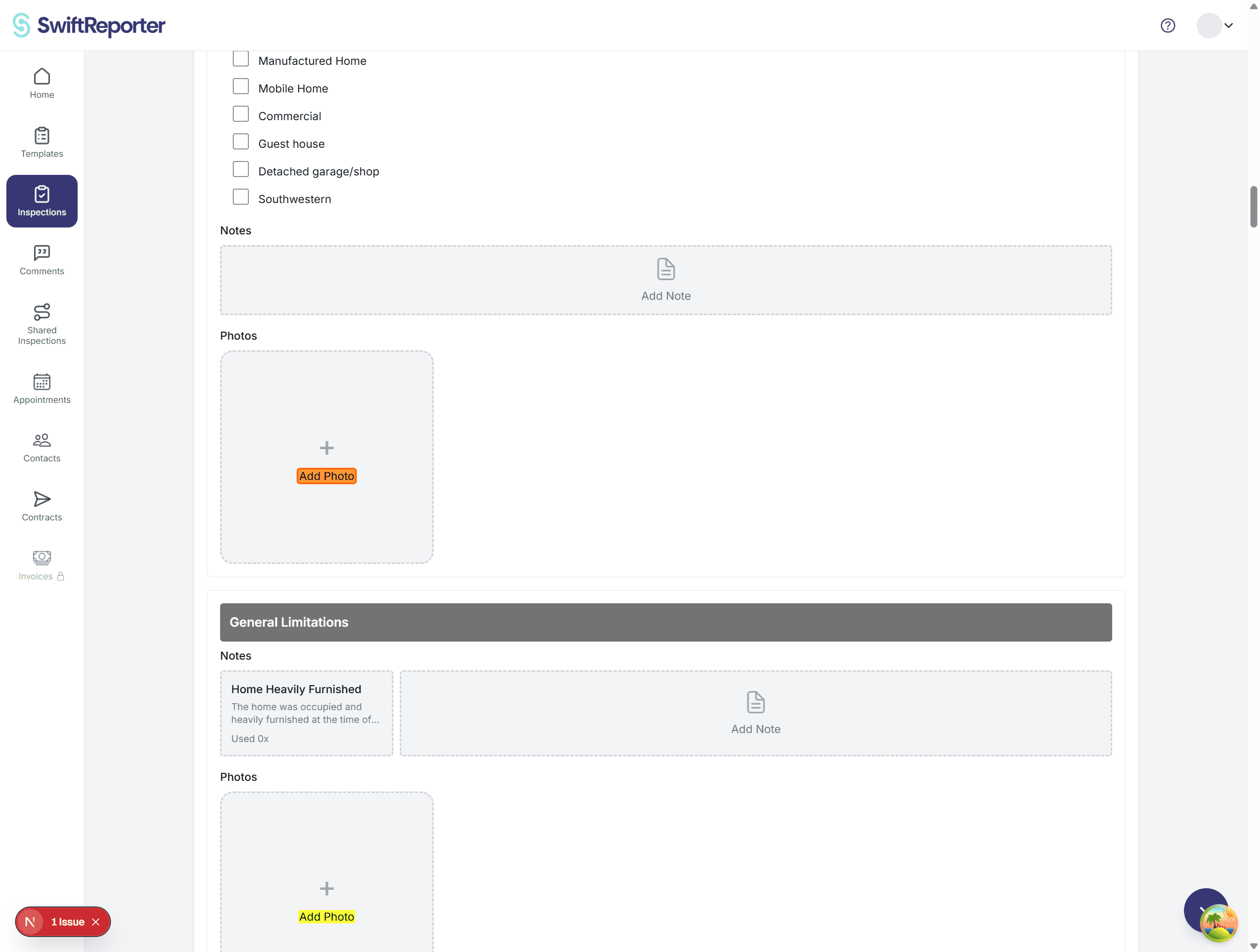
Photos and videos provide essential visual documentation for your observations and reports. The system integrates photos seamlessly with audio recordings and comment applications to create comprehensive documentation that enhances the professional quality of your inspection reports.
You can also add videos to observations and subcategories. Videos capture movement, sound, and narrated commentary that photos cannot convey. See Adding Videos to Observations for the full video workflow.
Basic Photo Addition Process
Adding Photos to Observations
Steps to Add Photos:
- Navigate to Observation: Ensure you are on the screen for the relevant observation or report editing screen
- Locate Add Photo/Video: Find the camera icon or Add Photo/Video control used to add photos and videos
- Choose Source: Tapping the button will usually present options:
- Take Photo: Opens your device's camera app to capture a new picture
- Choose from Gallery: Select existing photos from your device's storage
- Capture or Select:
- If taking a photo, capture the image and confirm
- If choosing from gallery, select the desired photo(s) and confirm
Photo Integration:
- Automatic Association: Selected photos are automatically linked to the current observation
- Grid Display: Photos appear in a photo grid or carousel view for easy viewing
- Full-Size Viewing: Tap photos to view them full-size and add annotations
- Report Integration: Photos added to observations automatically appear in generated reports
Reordering Media in a Grid (web)
On the web, you can drag photos and videos around inside a media grid to control the order they print in the report.
- Drag to reorder: Click and drag any photo or video tile within an observation, subcategory, question, or required-note grid to a new position. A ghost drop slot shows where it will land.
- Mixed photo + video order: Photos and videos share one explicit order in the same grid — drag them around each other freely.
- Move between grids: Drag a tile out of one grid and onto another grid (for example from a subcategory grid into a specific observation) to move it. The move is optimistic — it appears in the new grid immediately, and you can drag it again right away without waiting.
- Where reordering is disabled: Drag-to-reorder is off in read-only viewers (clients, finalized reports), on cover-page grids, and while a tile is still uploading or its video is still being processed. Wait for the upload or processing badge to clear before reordering.
Deleted Photos Are Cleaned Up Automatically
When you delete a photo, the report cleans up every reference to it in the same step. The deleted photo will not reappear elsewhere as a broken thumbnail or a "missing permission" tile in the editor, in the preview, or in the PDF.
Photo Integration with Comments
Visual Support for Applied Comments
Comment-Photo Relationship: When you apply comments to observations, photos provide crucial visual evidence:
Supporting Evidence:
- Visual Confirmation: Photos document the actual conditions described in comments
- Professional Credibility: Visual evidence supports professional observations
- Client Communication: Photos help clients understand the issues identified
- Report Enhancement: Combined text and visual content creates comprehensive documentation
Best Practices for Comment-Photo Integration:
- Relevant Photography: Capture images that directly relate to applied comment content
- Clear Documentation: Ensure photos clearly show the issues described in comments
- Multiple Angles: Take photos from different perspectives to fully document issues
- Detail Shots: Include close-up photos of specific defects or conditions
Photo-Enhanced Comment Application
Using Photos to Find Comments: The system can analyze photos to suggest relevant comments:
AI-Powered Photo Analysis:
- Visual Recognition: System analyzes photo content to identify potential issues
- Comment Suggestions: Suggests relevant comments based on visual content
- Context Matching: Matches visual content to appropriate template categories
- Professional Observations: Helps translate visual findings into professional language
Workflow Integration:
- Take Photo: Capture image of inspection finding
- AI Analysis: System analyzes photo content
- Comment Suggestions: Relevant comments suggested based on visual content
- Apply Comment: Select and apply appropriate comment with photo evidence
- Professional Documentation: Complete observation with both text and visual components
Audio-Photo Integration
Comprehensive Documentation Strategy
Multi-Modal Observation Creation: Combine photos with audio recordings for complete documentation:
Enhanced Documentation Process:
- Visual Capture: Take photos of the issue or condition
- Audio Description: Record detailed audio description while viewing photos
- AI Processing: System processes both visual and audio content
- Comment Matching: Suggests comments based on combined photo and audio analysis
- Professional Summary: Creates comprehensive observation from multiple sources
Audio-Photo Workflow Benefits:
- Complete Context: Audio provides context for what photos show
- Detailed Descriptions: Voice recordings capture details not visible in photos
- Professional Translation: AI converts casual audio descriptions into professional observations
- Efficient Documentation: Capture comprehensive information quickly during inspection
Photo Annotation with Audio Context
Enhanced Photo Documentation: Use audio recordings to enhance photo annotations:
Annotation Process:
- Photo Markup: Add arrows, circles, and highlights to photos
- Audio Explanation: Record voice explanations of photo annotations
- Professional Descriptions: AI converts audio explanations into professional text
- Report Integration: Enhanced photos with professional descriptions appear in reports
Example Integration:
Photo: Kitchen GFCI outlet with annotation arrow
Audio Recording: "The GFCI outlet near the sink won't reset when tested"
AI Summary: "GFCI outlet located on kitchen counter near sink does not reset when tested"
Comment Match: "GFCI Outlet Not Working" - Applied with location customization
Final Observation: Professional comment with specific location and supporting photo
Advanced Photo Features
Photo Organization and Management
Systematic Photo Organization:
- Observation Association: Photos automatically linked to specific observations
- Category Organization: Photos organized by template categories and subcategories
- Annotation Support: Add markups and highlights to emphasize important details
- Sequential Documentation: Capture before/during/after sequences when relevant
Photo Quality Enhancement:
- High Resolution: Capture clear, high-quality images for professional reports
- Proper Lighting: Ensure adequate lighting for clear documentation
- Focused Composition: Frame photos to clearly show relevant issues
- Multiple Perspectives: Document issues from various angles for complete coverage
Photo Analysis and AI Enhancement
Intelligent Photo Processing: The system provides advanced photo analysis features:
AI-Powered Features:
- Automatic Enhancement: Improve photo quality and clarity automatically
- Content Recognition: Identify components and issues in photos
- Annotation Assistance: Suggest areas of interest for annotation
- Professional Descriptions: Generate professional captions based on photo content
Photo-Based Comment Suggestions:
- Visual Issue Detection: AI identifies potential problems in photos
- Relevant Comment Matching: Suggests comments that match visual findings
- Context-Aware Suggestions: Considers template and category when suggesting comments
- Professional Language: Converts visual observations into professional terminology
Integration with Report Generation
Photo Presentation in Reports
Professional Photo Integration: Photos seamlessly integrate into generated reports:
Report Photo Features:
- Strategic Placement: Photos positioned to support related text content
- Professional Captions: AI-generated or custom captions describe photo content
- Annotation Display: Photo markups and highlights clearly visible in reports
- Size Optimization: Photos sized appropriately for professional presentation
Photo-Comment Coordination:
- Supporting Evidence: Photos provide visual support for applied comments
- Professional Correlation: Visual and text content work together effectively
- Complete Documentation: Combined content creates comprehensive observations
- Client Communication: Photos help clients understand written observations
Quality Assurance for Photo Documentation
Photo Review Process: Before report generation, review photo documentation:
Quality Checklist:
- Photos clearly show the issues described in comments
- Image quality is suitable for professional reports
- Annotations and markups are clear and helpful
- Photos are properly associated with relevant observations
- Visual content enhances rather than duplicates text content
Professional Standards:
- Clear Visibility: Ensure all important details are visible
- Professional Quality: Maintain high standards for image quality
- Relevant Content: Include only photos that support observations
- Appropriate Annotations: Use markups to highlight important features
Best Practices for Photo-Enhanced Observations
Efficient Photo Documentation
Strategic Photography:
- Purpose-Driven: Take photos with specific documentation goals
- Comment Support: Capture images that support potential comment applications
- Professional Quality: Maintain high standards for all photographic documentation
- Complete Coverage: Document all relevant aspects of observations
Workflow Integration:
- Real-Time Capture: Take photos during inspection as issues are discovered
- Audio Coordination: Combine photo capture with voice recordings
- Comment Application: Use photos to enhance comment selection and application
- Quality Review: Review photos before applying comments or generating reports
Professional Development
Photography Skills:
- Technical Competence: Develop skills for high-quality inspection photography
- Compositional Awareness: Learn to frame photos effectively for documentation
- Lighting Management: Understand how to capture clear images in various conditions
- Equipment Familiarity: Master your device's camera capabilities for inspection use
Integration Mastery:
- Multi-Modal Documentation: Become proficient at combining photos, audio, and comments
- AI Feature Utilization: Learn to leverage AI-powered photo analysis and suggestions
- Professional Presentation: Develop skills for creating professional photo-enhanced reports
- Efficiency Optimization: Streamline photo documentation processes for maximum efficiency
Troubleshooting Photo Issues
Common Photo Problems
Technical Issues:
- Poor Image Quality: Check lighting conditions and camera settings
- Photo Association: Ensure photos are properly linked to correct observations
- Annotation Problems: Verify markup tools are working correctly
- Upload Failures: Check device storage and network connectivity
Integration Issues:
- Comment Mismatch: Ensure photos support applied comment content
- AI Analysis Problems: Verify photos are clear enough for automated analysis
- Report Generation: Check that photos appear correctly in generated reports
- Professional Standards: Ensure photo quality meets professional requirements
Performance Optimization
Efficient Photo Management:
- Strategic Capture: Take photos with specific purposes in mind
- Quality Focus: Prioritize photo quality over quantity
- Systematic Organization: Develop consistent photo organization habits
- Technology Leverage: Use AI features to enhance photo documentation efficiency
Photos, when effectively integrated with audio recordings and comment applications, create a powerful documentation system that enhances the professional quality and comprehensiveness of your inspection reports while maintaining efficiency in your workflow.