
Creating and Managing Notes
Creating and Managing Notes
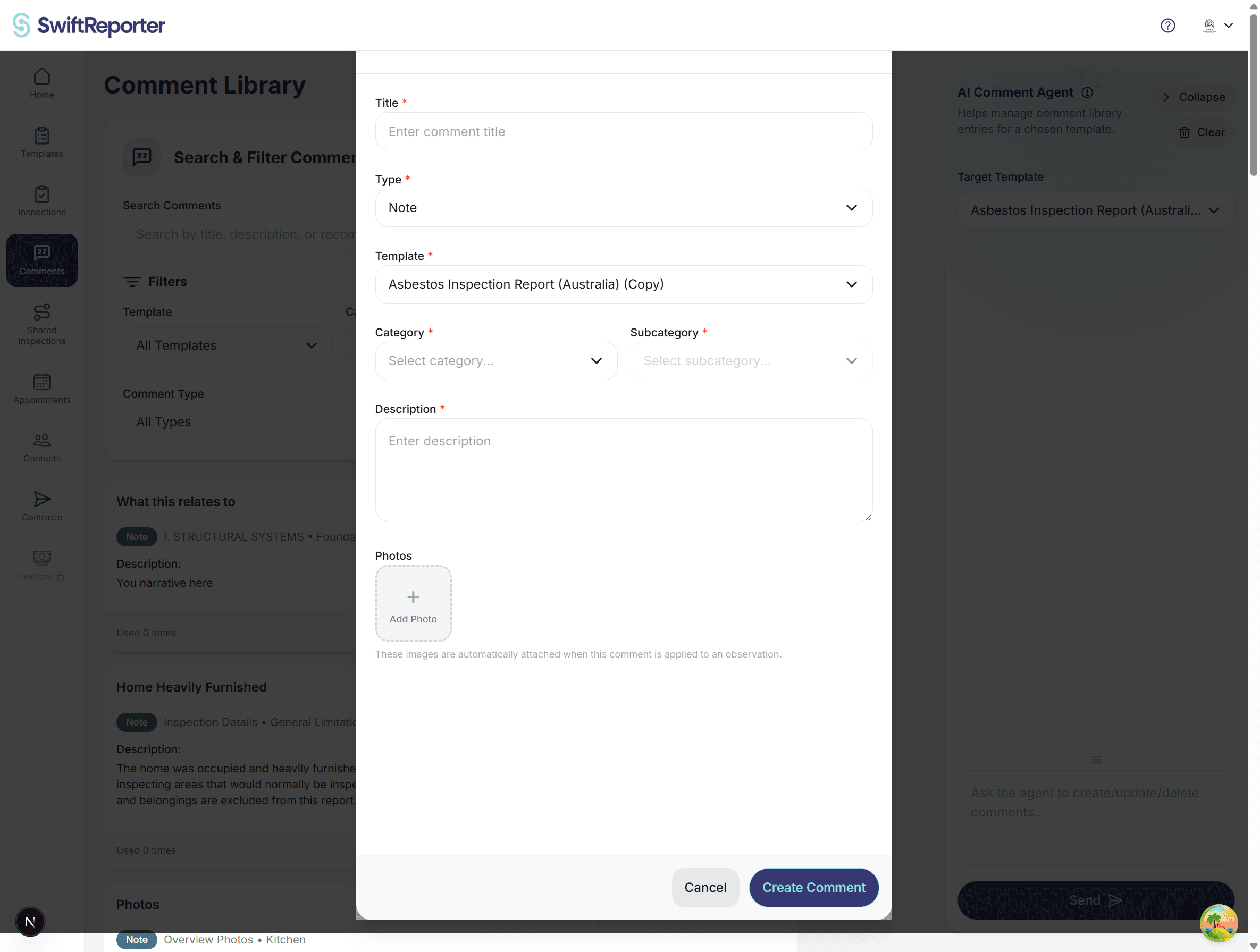
Notes are reusable text snippets that can be used across inspections and reports. They help standardize common observations, recommendations, and statements in your inspection reports.
What are Notes?
Notes are pre-written text snippets that can include:
- Standard observations
- Common recommendations
- Regulatory requirements
- Boilerplate text
- Standard disclaimers
💡 Tip: Unlike defects, notes don't require severity levels or location information, making them perfect for general statements and recommendations.
Creating Notes
From the Comments Library
- Navigate to Comments: Go to the Comments section in your app
- Create New Note: Tap the "+" button to create a new comment
- Select Type: Choose "Note" as the comment type
- Fill in Details:
- Title: Short, descriptive name for the note
- Description: The full text content of the note
- Template: Select which template this note belongs to
- Category: Choose the appropriate category
- Subcategory: Select the specific subcategory
- Hide title in the report (optional): When on, the note's title is suppressed in both the on-screen report and the PDF — only the description text appears. Off by default.
From Template Creation
When creating notes directly in templates:
- Open Template Editor: Navigate to your template settings
- Select Subcategory: Choose the subcategory where you want to add notes
- Add Note: Use the "+" button in the Required Notes section
- Create or Select: Either create a new note or select from existing ones
ℹ️ Note: Notes created during template editing are automatically associated with the correct category and subcategory.
Note Organization
Categories and Subcategories
Notes must be organized by:
- Template: Which inspection template they belong to
- Category: Main section of the inspection
- Subcategory: Specific area within the category
This organization helps you find and use notes more efficiently during inspections.
Naming Conventions
Good note titles:
- "Standard Foundation Recommendation"
- "Electrical Safety Disclaimer"
- "Moisture Intrusion Warning"
Avoid:
- Generic titles like "Note 1"
- Overly long titles
- Duplicate titles within the same category
Managing Existing Notes
Editing Notes
- Find the Note: Use the search function in the Comments library
- Edit Details: Update title, description, or categorization
- Save Changes: Changes will apply to all future uses
🚨 Warning: Editing a note affects all future inspections but doesn't change past reports.
Usage Tracking
The system automatically tracks:
- How often each note is used
- When it was last used
- Which templates use the note
This helps identify your most valuable notes and unused ones that can be cleaned up.
Best Practices
Content Guidelines
- Keep it Concise: Notes should be clear and to the point
- Use Professional Language: Maintain a professional tone
- Include Context: Make notes self-explanatory
- Regular Updates: Review and update notes periodically
Organization Tips
- Consistent Naming: Use similar naming patterns within categories
- Logical Grouping: Group related notes in the same subcategory
- Template Specific: Create notes specific to each template type
- Regular Cleanup: Remove unused or duplicate notes
Efficiency Tips
- Create Templates: Build note templates for common scenarios
- Use Search: Take advantage of the search functionality
- Review Usage: Check usage statistics to optimize your note library
- Batch Creation: Create multiple related notes at once
Advanced Features
Note Embeddings
The system uses AI to:
- Suggest similar notes when creating new ones
- Help find relevant notes through semantic search
- Identify potential duplicates
Template Integration
Notes can be:
- Required for specific subcategories
- Optional additions to any section
- Automatically suggested based on content
Hide Title in the Report
Each note has a per-note Hide title toggle (in both the standalone note editor and the in-template note editor):
- Off (default): The note's title prints above its description in the report and the PDF.
- On: The title is hidden everywhere the note appears in the report and PDF — only the body text shows. Useful when the title is just an internal label and the body is what the reader should see.
The toggle has no effect on note search, the comments library list, or how the note is selected during inspections — only on what prints in the report.
💡 Tip: The more you use notes, the better the system becomes at suggesting relevant ones for your inspections.