
Using Notes in Templates
Using Notes in Templates
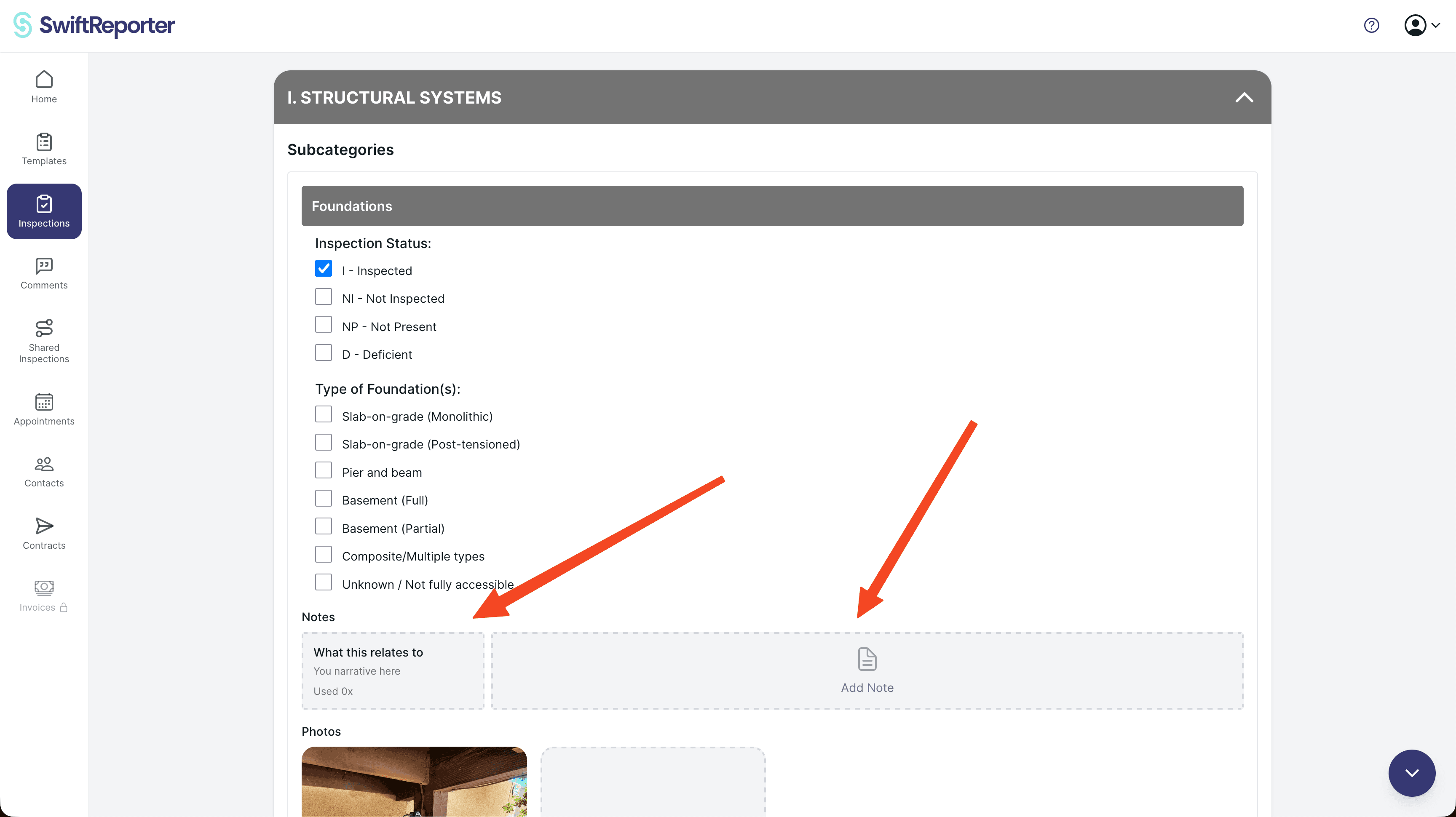
Templates can include "Required Notes" that must be completed during inspections. This feature helps ensure consistency and completeness across all reports generated from your templates.
What are Required Notes?
Required Notes are pre-defined note groups that inspectors must complete when filling out reports. They appear as mandatory fields in the inspection workflow and ensure important information is consistently captured.
Types of Required Notes
Dropdown Notes (Select One / single-select)
- Inspector must select exactly one note from the available options
- Best for situations where only one condition applies
- Example: "Foundation Type" with options like "Concrete Slab", "Crawl Space", "Basement"
Checkbox Notes (Select Multiple / multi-select)
- Inspector can select multiple notes from the available options
- Best for situations where multiple conditions may apply
- Example: "Safety Concerns" with options like "Electrical Hazards", "Structural Issues", "Environmental Concerns"
Text Notes (Free-text)
- Inspector must type a free-text note in the box; preset options are not used.
- The subcategory cannot be marked complete until at least one text note is written for this group.
- Best for write-ins where the answer is too variable to preset (custom measurements, site-specific findings, etc.).
Optional "Add note" Path
For dropdown and checkbox groups, the template author can also turn on an Allow Add note option. When this is on:
- The required-note group shows an Add note action alongside the preset options.
- Tapping it opens the searchable note picker so the inspector can add any note from the library, or create a brand-new note inline, to satisfy the requirement.
- The requirement is satisfied as soon as either a preset is picked or an Add-note selection is made.
Adding Required Notes to Templates
Step 1: Navigate to Template Editor
- Open Templates: Go to the Templates section
- Select Template: Choose the template you want to edit
- Find Subcategory: Navigate to the subcategory where you want to add required notes
Step 2: Add Required Note Group
- Locate Required Notes Section: Look for the "Required Notes" section in the subcategory
- Click Add Button: Tap the "+" button next to "Required Notes"
- Choose Note Type: Select single-select, multi-select, or text.
- Allow Add Note (optional): For single-select and multi-select groups, turn on Allow Add note if inspectors should also be able to satisfy the group by picking any note from the library or creating a new one.
Step 3: Configure Note Group
-
Set Title: Enter a descriptive title for the note group
- Example: "Foundation Recommendations"
- Example: "Electrical Safety Requirements"
-
Select Notes: Choose which notes to include in this group
- Browse existing notes in your library
- Create new notes if needed
- Select multiple notes for the group
💡 Tip: Group related notes together. For example, all foundation-related recommendations should be in one note group.
Managing Required Notes
Editing Note Groups
- Find the Note Group: Navigate to the subcategory containing the note group
- Edit Title: Click on the title to modify it
- Change Type: Switch between dropdown and checkbox if needed
- Modify Notes: Add or remove notes from the group
Organizing Note Groups
- Logical Grouping: Group related notes together
- Clear Titles: Use descriptive titles that explain the purpose
- Appropriate Type: Choose dropdown for single selections, checkbox for multiple
- Order Matters: Arrange note groups in the order they should appear in reports
Best Practices for Note Groups
- Keep Groups Focused: Each group should cover one specific topic
- Use Clear Titles: Titles should explain what the inspector needs to select
- Provide Options: Include all reasonable options for the selection
- Review Regularly: Update note groups as standards and practices change
How Required Notes Work in Inspections
During Inspection
- Mandatory Completion: Required notes must be completed before the report can be finalized
- Visual Indicators: Incomplete required notes are highlighted in the interface
- Progress Tracking: The system tracks completion of required notes in the progress indicator
Inspector Experience
For Dropdown Notes (single-select):
- Inspector sees the available options as a list of selectable rows. The note's title is the option label; the body text stays hidden until the option is selected, so long lists stay scannable.
- Must select exactly one option.
- Once selected, the full body text is shown for reference and prints in the report.
For Checkbox Notes (multi-select):
- Inspector sees a list of selectable rows. The note title is the option label; the body reveals when the option is selected.
- Can select multiple options as applicable. Multi-select stays fluid — adding more picks does not reset or flicker the list.
- All selected notes will appear in the final report.
For Text Notes:
- Inspector sees a free-text input. They must type a note before the subcategory can be marked complete.
When "Add note" is enabled:
- The inspector also sees an Add note action with the preset options. Tapping it opens the note picker, where they can search for an existing note or create a new one to satisfy the requirement.
Report Generation
How Required Notes Appear
Required notes are automatically included in generated reports:
- Organized by Category: Notes appear under their respective subcategories
- Labeled Clearly: Each note group title appears as a field label
- Content Included: The full text of selected notes is included
- Professional Format: Notes are formatted consistently with other report content
Example in Report
Foundation Assessment

Foundation Type: Concrete Slab

Foundation Recommendations:
- Ensure adequate drainage around foundation perimeter
- Monitor for settlement cracks during seasonal changes
- Maintain proper grading to direct water away from structure
Advanced Configuration
Note Selection Strategy
Single Critical Item (Dropdown)
- Use when only one condition can be true
- Example: "Primary Heating System Type"
- Example: "Foundation Material"
Multiple Applicable Items (Checkbox)
- Use when multiple conditions may apply
- Example: "Safety Concerns Identified"
- Example: "Recommended Improvements"
Integration with Questions
Required notes work alongside template questions:
- Notes First: Required notes typically appear before questions
- Complementary: Notes provide context that questions can build upon
- Comprehensive: Together they ensure complete coverage of the topic
Troubleshooting
Common Issues
Note Group Not Appearing
- Check that the note group has notes assigned
- Verify the subcategory is properly configured
- Ensure the template is saved
Inspector Can't Complete Report
- Check for incomplete required notes
- Verify all note groups have valid selections
- Review progress indicators for guidance
Notes Missing from Report
- Confirm notes were selected during inspection
- Check template configuration
- Verify report generation settings
🚨 Warning: Removing required notes from a template affects all future inspections but doesn't change existing reports.
Tips for Success
- Start Simple: Begin with basic note groups and expand as needed
- Test Thoroughly: Create test inspections to verify note group behavior
- Get Feedback: Have inspectors provide input on note group usefulness
- Keep Updated: Regularly review and update note groups as practices evolve
- Document Changes: Track modifications to templates for consistency
💡 Tip: Required notes are most effective when they capture information that's consistently needed across all inspections of a particular type.