
Notes System Overview
Notes System Overview
The Notes system is a powerful feature that enables you to create consistent, professional inspection reports by using reusable text snippets. This overview explains how the notes system works and how it integrates with templates and reports.
What is the Notes System?
The Notes system allows you to:
- Create reusable text snippets for common observations and recommendations
- Integrate notes into templates as required fields
- Add notes to reports during inspections
- Maintain consistency across all your inspection reports
- Save time by reusing well-crafted text
Key Concepts
Notes vs. Defects
Notes are used for:
- General statements and recommendations
- Regulatory requirements
- Standard disclaimers
- Boilerplate text
- Contextual information
Defects are used for:
- Specific problems found during inspection
- Issues requiring severity ratings
- Location-specific problems
- Items needing repair recommendations
Types of Notes Usage
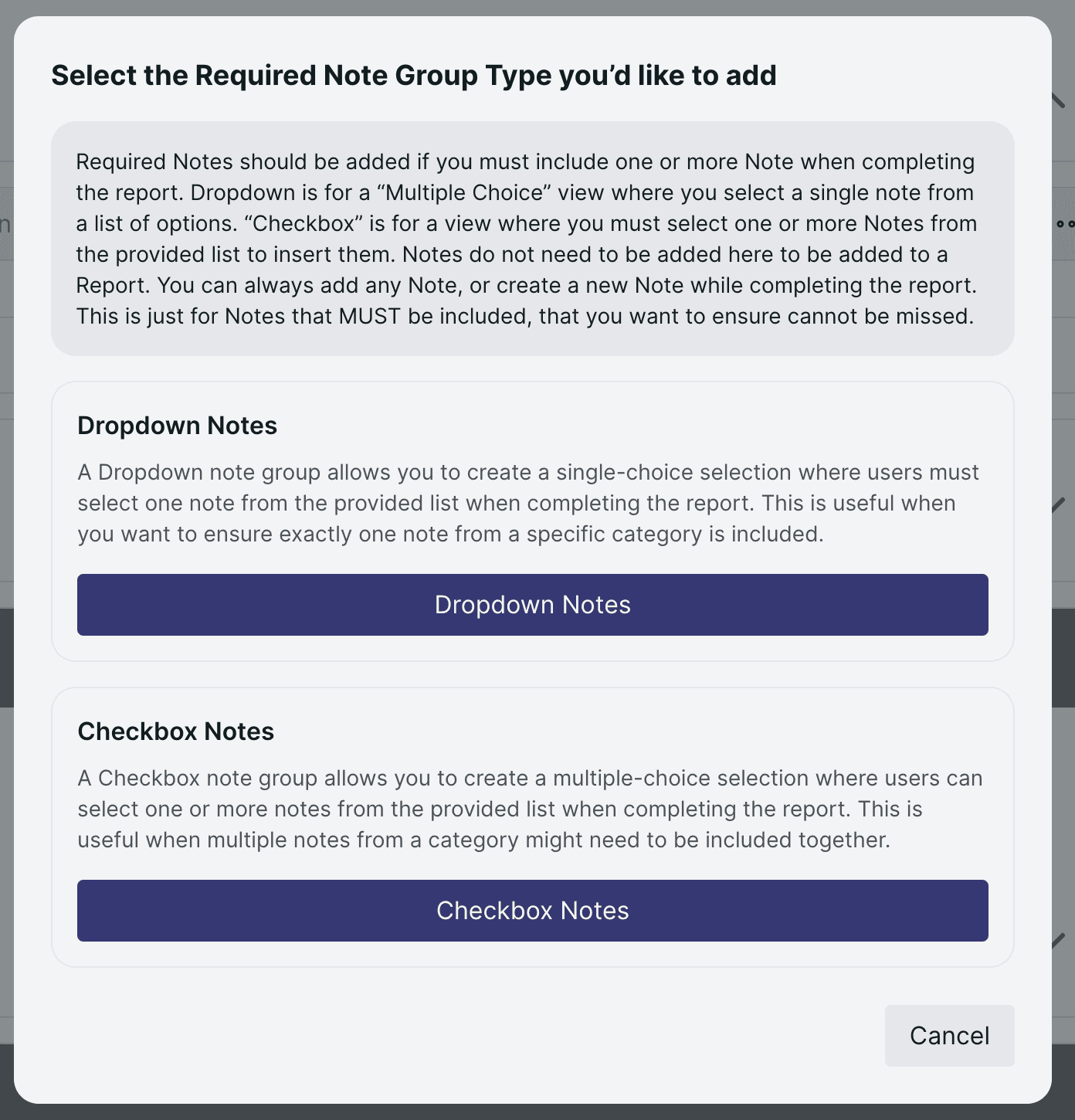
Required Notes (Template-Defined)
- Mandatory selections defined in templates
- Must be completed before report finalization
- Ensures consistency across all reports
- Available as dropdown or checkbox selections
Manual Notes (Inspector-Added)
- Optional additions during inspection
- Provide flexibility for unique situations
- Selected from your existing note library
- Can be added to any subcategory
How the System Works
---
title: Notes System Flow
---
graph TD
    A[Create Notes] --> B[Add to Template]
    A --> C[Note Library]
    B --> D[Required Notes]
    C --> E[Manual Notes]
    D --> F[Inspection Process]
    E --> F
    F --> G[Report Generation]
    G --> H[Professional Report]
Step 1: Create Notes
Start by building your note library with commonly used text snippets:
- Standard observations
- Common recommendations
- Regulatory requirements
- Safety disclaimers
Step 2: Template Integration
Add notes to templates as required fields:
- Choose appropriate subcategories
- Create note groups (dropdown or checkbox)
- Ensure logical organization
Step 3: Inspection Usage
During inspections, work with notes:
- Complete required notes (mandatory)
- Add manual notes (optional)
- Review selections for accuracy
Step 4: Report Generation
Notes automatically appear in reports:
- Professional formatting
- Consistent placement
- Complete integration with other content
Benefits of Using Notes
Consistency
- Standardized language across all reports
- Consistent recommendations and observations
- Professional presentation
Efficiency
- Reduced typing during inspections
- Faster report completion
- Reusable content saves time
Quality
- Well-crafted text improves report quality
- Reduces errors and typos
- Ensures important information isn't forgotten
Compliance
- Helps meet regulatory requirements
- Ensures standard disclaimers are included
- Maintains professional standards
Getting Started
For New Users
- Start with Common Notes: Begin by creating notes for your most frequently used text
- Organize by Category: Group notes logically by inspection area
- Test in Templates: Add basic required notes to your templates
- Practice During Inspections: Use both required and manual notes
- Refine Over Time: Improve your note library based on usage
For Existing Users
- Review Current Notes: Audit your existing note library
- Improve Organization: Better categorize and organize notes
- Expand Required Notes: Add more required notes to templates
- Optimize Usage: Use analytics to identify most valuable notes
- Update Regularly: Keep notes current with industry changes
Documentation Structure
This documentation is organized into focused guides:
Creating and Managing Notes
- How to create new notes
- Organizing your note library
- Best practices for note content
- Managing existing notes
Using Notes in Templates
- Adding required notes to templates
- Configuring dropdown vs checkbox notes
- Best practices for template design
- Managing note groups
Using Notes in Reports
- Working with required notes during inspections
- Adding manual notes to reports
- Report generation and formatting
- Troubleshooting common issues
Advanced Features
AI-Powered Suggestions
The system uses artificial intelligence to:
- Suggest relevant notes based on context
- Identify similar or duplicate notes
- Recommend improvements to note content
Usage Analytics
Track how your notes are being used:
- Most frequently used notes
- Unused notes that can be cleaned up
- Patterns in note usage
Search and Discovery
Find notes quickly using:
- Full-text search across all notes
- Category and subcategory filtering
- Recently used notes
- Favorite notes
Best Practices Summary
Content Quality
- Use clear, professional language
- Keep notes concise but complete
- Include relevant technical details
- Maintain consistent tone
Organization
- Group related notes together
- Use descriptive titles
- Maintain logical category structure
- Regular cleanup of unused notes
Template Design
- Place required notes appropriately
- Choose correct selection types
- Provide adequate options
- Test with real inspections
Inspection Workflow
- Complete required notes early
- Add manual notes for context
- Review selections before finalizing
- Maintain accuracy and relevance
Common Use Cases
Residential Inspections
- Foundation recommendations
- Electrical safety requirements
- HVAC maintenance notes
- Safety disclaimers
Commercial Inspections
- Code compliance statements
- Accessibility requirements
- Fire safety recommendations
- Environmental considerations
Specialty Inspections
- Pool and spa safety
- Radon testing disclaimers
- Mold assessment notes
- Energy efficiency recommendations
Getting Help
If you need assistance with the notes system:
- Review the detailed documentation for each area
- Test features in a practice environment
- Contact support for technical issues
- Provide feedback for system improvements
💡 Tip: The notes system becomes more valuable as you build a comprehensive library. Start with your most common text snippets and expand over time.
Next Steps
- Read the Detailed Guides: Review the specific documentation for creating notes, using them in templates, and working with them in reports
- Start Building: Begin creating your note library with common text snippets
- Implement Gradually: Add notes to templates and practice using them
- Iterate and Improve: Continuously refine your notes based on usage and feedback
The notes system is designed to make your inspection process more efficient and your reports more professional. Take advantage of its features to create a workflow that works best for your specific needs.